
Physical Therapy in New York for Skiers: 7 Ways to Prevent Ski Injuries
nyppt
October 16, 2026
Blogs
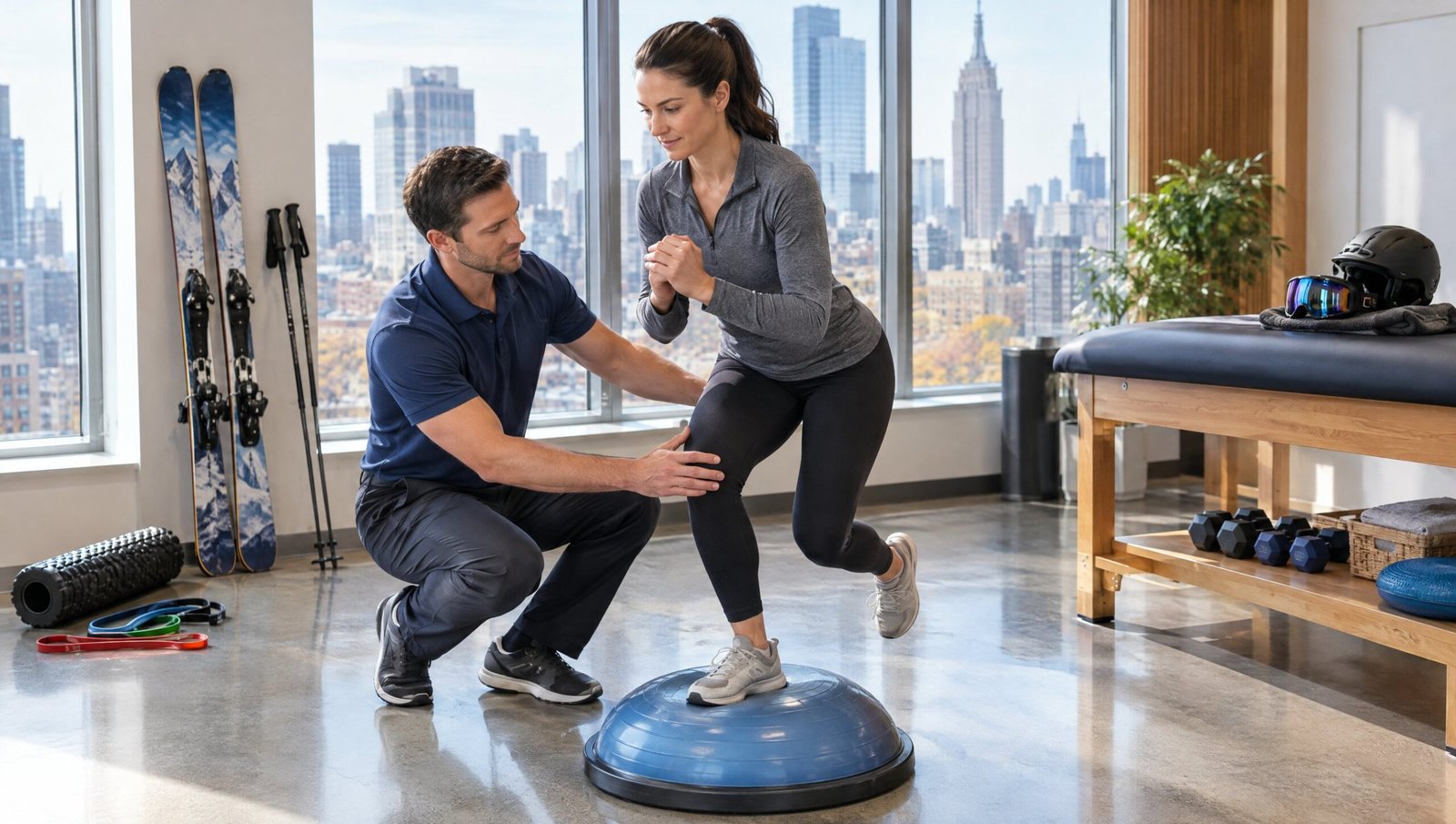
Ski season is almost here. Before you head to the Catskills, the Adirondacks, or Vermont this winter, physical therapy in New York can help you build the strength, balance, and knee control you need to enjoy every run and lower your risk of a season-ending injury.
Every year, thousands of New Yorkers trade the city sidewalks for the slopes. Many skiers spend the work week sitting at a desk, commuting on the subway, or squeezing in short workouts, and then ask their bodies to handle hours of skiing on the weekend. That sudden jump in demand is one of the reasons ski injuries happen so often early in the season, and why more skiers are looking into physical therapy in New York before their first trip.
The good news is that many common ski injuries are linked to factors you can work on before the season starts, including leg strength, endurance, balance, mobility, and how well you control your knees when you land, turn, or fall. With a focused plan and guidance from a physical therapist, you can arrive on the mountain stronger and more confident.
In this guide, we explain the most common ski injuries, share 7 practical ways to prepare your body, and show how physical therapy in New York can support skiers before, during, and after the season.
🡒 Read the AAOS guide to skiing injury prevention →
Why Ski Season Preparation Matters for New Yorkers
Skiing is a demanding sport. It requires your legs to work for long periods in a bent-knee position, your hips and core to keep you balanced on changing terrain, and your joints to absorb sudden forces when you hit a patch of ice, catch an edge, or take a fall.
For many of the patients we see for physical therapy in Manhattan, the first ski weekend of the year is a big change from their normal routine. Long hours of sitting can leave the hips stiff and the glutes underactive, while a busy schedule can make it hard to build the leg endurance skiing requires. When fatigue sets in late in the day, technique often breaks down, and that is when many skiers get hurt.
Preparing your body for ski season is not about becoming an elite athlete. It is about making sure your muscles, joints, and balance systems are ready for the specific demands of skiing so you can enjoy the season with fewer setbacks.
Common Ski Injuries Treated With Physical Therapy in New York
Ski injuries can affect almost any part of the body, but some areas are injured far more often than others. Understanding these injuries can help you see why certain exercises matter.
Knee Injuries: ACL and MCL Sprains
The knee is one of the most commonly injured joints in skiing. Medial collateral ligament (MCL) sprains often happen when the ski tips separate or the knee is pushed inward, such as during a wedge or snowplow position. Anterior cruciate ligament (ACL) injuries can occur during twisting falls, awkward landings, or when a skier falls backward and the ski continues to move forward.
Strong hamstrings, glutes, and quadriceps, combined with good balance and knee control, can help your body manage these forces more effectively. Knee sprains are also among the most common winter injuries we treat with physical therapy in Manhattan.
🡒 Learn more about ACL injuries from AAOS →
Skier’s Thumb
Skier’s thumb is an injury to the ligament on the inside of the thumb. It often happens when a skier falls on an outstretched hand while still holding a ski pole, which forces the thumb away from the hand. Pain, swelling, and weakness when pinching or gripping are common symptoms. If gripping a ski pole or even a coffee cup becomes painful, physical therapy in Manhattan can help restore hand strength once a serious tear has been ruled out.
Shoulder Injuries
Falls on an outstretched arm or directly onto the shoulder can lead to shoulder sprains, rotator cuff injuries, or dislocations. Shoulder strength and stability can play a role in how well the joint tolerates these sudden loads. Physical therapy in New York for shoulder injuries typically focuses on restoring motion, strength, and stability so you can return to the slopes safely.
Wrist Injuries
Wrist injuries are especially common among snowboarders, who tend to fall forward or backward onto their hands. Skiers can also injure their wrists while trying to catch themselves during a fall.
Lower Back and Hip Strain
Holding a flexed skiing posture for hours, carrying equipment, and reacting to uneven terrain can place a significant load on the lower back and hips. Weak core muscles and tight hips may make these areas more likely to become sore or strained.
🡒 Read: Physical Therapy in Manhattan for Back Pain →
7 Ways to Prevent Ski Injuries This Season
The best time to prepare for ski season is several weeks before your first trip. These seven strategies form the foundation of the pre-season programs we design for skiers who come to us for physical therapy in New York.
1. Start Training 6 to 8 Weeks Before Your First Ski Trip
Strength, endurance, and balance take time to build. Starting your preparation six to eight weeks before the season gives your muscles and joints time to adapt gradually. Two to three focused sessions per week can make a meaningful difference, especially if you combine them with regular walking, cycling, or other cardiovascular exercise.
If you are reading this in October, you are right on time to start a structured program with physical therapy in Manhattan before most resorts open.
2. Build Leg Strength and Endurance
Skiing relies heavily on the quadriceps, which work continuously to support your body in a bent-knee position. Strong legs help you maintain good technique for longer and absorb bumps and turns more efficiently.
Helpful exercises may include:
- Squats and goblet squats
- Wall sits to build endurance in a skiing position
- Forward, reverse, and lateral lunges
- Step-ups onto a box or stair
- Single-leg exercises such as split squats
3. Strengthen Your Hamstrings and Glutes to Protect Your Knees
Your hamstrings help stabilize the knee and resist the forward movement of the shinbone that can stress the ACL. Your glutes help control the position of your thigh and prevent your knee from collapsing inward when you turn or land.
Exercises such as bridges, single-leg bridges, Romanian deadlifts, hamstring curls, and lateral band walks are often included in ski preparation programs. If you are new to strength training, physical therapy in New York can help you choose the right exercises and progress them safely.
4. Improve Balance and Single-Leg Control
Skiing constantly challenges your balance. Each turn shifts your weight from one leg to the other, and the snow surface is always changing. Balance training helps your muscles and nervous system react quickly to these changes.
Balance exercises may include:
- Single-leg standing, first with eyes open and then with eyes closed
- Single-leg squats with good knee alignment
- Balance work on a foam pad, wobble board, or BOSU trainer
- Reaching and rotating while balancing on one leg
5. Practice Landing and Lateral Movement
Many knee injuries happen during landings, quick direction changes, or reactions to an unexpected loss of balance. Controlled jumping and side-to-side drills can teach your body to land softly with your knees aligned over your feet.
Examples include skater hops, lateral bounds, small box jumps, and jump-and-stick landings. These exercises should be added gradually and only once you have built a solid base of strength. If you have had a previous knee injury, this is a stage where supervised physical therapy in New York can be especially valuable.
6. Restore Mobility in Your Hips, Ankles, and Spine
Good skiing posture depends on mobile hips, ankles that can bend forward in a ski boot, and a mid-back that can rotate freely. Stiffness in any of these areas can shift extra stress to the knees and lower back.
Hip flexor stretches, ankle mobility drills, thoracic rotation exercises, and foam rolling can help you move more freely. This is especially important if you sit for most of the day.
🡒 Try our 10-minute routine to undo sitting →
7. Ski Smart Once You Reach the Mountain
Preparation continues once you arrive at the resort. A few simple habits can make a big difference:
- Warm up with light movement and a few easy runs before tackling harder terrain
- Have your bindings adjusted by a certified ski technician and make sure your boots fit well
- Wear a helmet and use equipment that matches your ability level
- Take regular breaks, eat, and stay hydrated
- Stop before you are exhausted, because fatigue affects technique and reaction time
- Choose runs that match your skill level, especially early in the season
A Simple Pre-Season Ski Workout to Get Started
The following routine is an example of the type of workout many skiers use to prepare for the season. It is not a substitute for an individualized program, and you should stop any exercise that causes pain.
- Bodyweight or goblet squats: 3 sets of 10 to 12 repetitions
- Wall sit: 3 holds of 30 to 60 seconds
- Reverse lunges: 3 sets of 8 to 10 repetitions per leg
- Single-leg bridges: 3 sets of 8 to 10 repetitions per leg
- Lateral band walks: 3 sets of 10 to 12 steps each direction
- Single-leg balance: 3 holds of 30 seconds per leg
- Side plank: 3 holds of 20 to 30 seconds per side
- Skater hops: 3 sets of 8 to 10 controlled hops per side, once your strength base is solid
Focus on quality over quantity. Your knees should track in line with your toes during squats, lunges, and landings, and your movements should feel controlled rather than rushed. If any of these exercises feel difficult or painful, an evaluation with physical therapy in Manhattan can help you find out why.
How Physical Therapy in New York Helps Skiers
Physical therapy in New York is not only for people who are already injured. For skiers, a physical therapist can identify weaknesses, mobility restrictions, and movement patterns that may increase your risk of injury, and then build a program to address them before you reach the slopes.
Depending on your needs, a pre-season physical therapy plan may include:
- A movement assessment that looks at squatting, lunging, balance, and landing mechanics
- Strength and flexibility testing for the hips, knees, ankles, and core
- A personalized strengthening and balance program
- Plyometric and agility training when appropriate
- Manual therapy to address stiffness or muscle tension
- Guidance on how to progress your training safely before your trip
- Education on technique-related factors and fatigue management
When you choose physical therapy in New York before ski season, you are investing in a plan that is designed around your body, your experience level, and the type of skiing you enjoy, whether that means groomed trails, moguls, or backcountry terrain.
🡒 Explore physical therapy treatments at NYPPT →
Skiing After a Previous Knee Injury or Surgery
If you have had an ACL reconstruction, a meniscus injury, an MCL sprain, or another knee problem in the past, preparing for ski season deserves extra attention. Many skiers come to physical therapy in New York after an injury from a previous season. A previous injury can leave lingering differences in strength, balance, or confidence between your legs, even if you feel fine during everyday activities.
A physical therapist can assess whether your injured leg is keeping up with the other side and use functional tests, such as single-leg hop tests and strength comparisons, to help guide your return to skiing. If you are recovering from surgery, your physical therapist will also coordinate with your surgeon’s recommendations before you return to the slopes.
🡒 Read the ChoosePT guide to MCL injuries →
What to Do If You Get Hurt on the Slopes
Even with excellent preparation, injuries can still happen. If you are hurt while skiing, stop skiing and let ski patrol or the resort’s medical staff evaluate you.
Seek prompt medical attention if you experience:
- A pop in the knee followed by rapid swelling
- Inability to put weight on your leg
- A knee that feels unstable or gives way
- A visible deformity, severe pain, or numbness
- Any head injury, headache, dizziness, confusion, or nausea after a fall
For milder sprains and strains, relative rest, ice, gentle compression, and elevation may help manage symptoms in the first few days. Once serious injury has been ruled out, physical therapy in New York can guide your recovery and help you regain strength, motion, and confidence.
When Should a Skier See a Physical Therapist?
Consider scheduling an evaluation if you:
- Have knee, hip, or back pain during workouts or after skiing
- Notice your knee caving inward during squats or single-leg exercises
- Have a previous ski injury that never fully recovered
- Had knee surgery and want to return to skiing safely
- Feel unstable or lack confidence on one leg
- Have pain, swelling, or stiffness that lasts more than a few days after a ski trip
- Want a personalized pre-season program before your first trip
Early evaluation with physical therapy in Manhattan can help you understand what is contributing to your symptoms and give you a clear plan for the rest of the season.
🡒 Read: 6 Signs You Might Need Physical Therapy →
Physical Therapy in Manhattan for Skiers at NYPPT
At New York Plaza Physical Therapy (NYPPT), we help active New Yorkers prepare for the activities they love and recover when injuries happen. Our approach to physical therapy in Manhattan is personalized around your goals, your history, and the demands of your sport.
For skiers, treatment may focus on building strength and endurance, improving balance and knee control, restoring mobility, and creating a safe plan to return to the slopes after an injury. We combine hands-on care, therapeutic exercise, and movement education so you can understand your body and ski with greater confidence.
With clinics in Midtown, the Financial District, and the Upper East Side, it is easy to fit physical therapy in Manhattan into a busy schedule before ski season begins.
- Physical Therapy in Midtown Manhattan
- Physical Therapy in the Financial District
- Physical Therapy on the Upper East Side
Frequently Asked Questions
1. How early should I start preparing for ski season?
Ideally, begin six to eight weeks before your first ski trip. This gives you enough time to build strength, endurance, and balance gradually. Even a few weeks of focused preparation is better than none.
2. What are the best exercises to prevent ski injuries?
Squats, lunges, wall sits, bridges, hamstring exercises, lateral band walks, single-leg balance drills, core exercises, and controlled jumping drills are commonly used. The best program depends on your fitness level, injury history, and skiing goals.
3. Can physical therapy in New York help prevent ACL injuries in skiers?
No program can eliminate the risk of injury, but physical therapy can address factors that may contribute to ACL injuries, such as weak hamstrings and glutes, poor balance, and knee alignment problems during landings and turns.
4. Should I see a physical therapist before skiing if I have had knee surgery?
Yes. If you have had ACL reconstruction, meniscus surgery, or another knee procedure, a physical therapist can assess your strength, stability, and movement and help determine whether you are ready to return to skiing in coordination with your surgeon.
5. Where can I find physical therapy in New York for ski injuries?
NYPPT offers physical therapy in New York at clinics in Midtown, the Financial District, and the Upper East Side, making physical therapy in Manhattan convenient whether you live or work uptown or downtown. Our physical therapists help skiers prepare for the season and recover from knee, shoulder, back, and other sports injuries.
6. How long does it take to recover from a skiing knee sprain?
Recovery time depends on which structures are injured and how severe the injury is. Mild sprains may improve within a few weeks, while ligament tears that require surgery can take many months. A physical therapist can give you a more specific timeline after an evaluation.
Get Ski-Ready With Physical Therapy in New York
A great ski season starts long before the first chairlift ride. Building strength, endurance, balance, and mobility now can help you ski with more control, enjoy longer days on the mountain, and reduce your risk of injury.
Whether you want physical therapy in New York before your first trip, have pain from a previous injury, or simply want a plan designed around your body, our Manhattan physical therapists can help you prepare for the season and get back to the slopes safely if an injury happens.
🡒 Getting ready for ski season? Contact NYPPT to schedule a physical therapy evaluation →
Helpful Resources: