
Labor and Delivery Preparation: Exercises & Massage | NYPPT
nyppt
September 18, 2026
Blogs
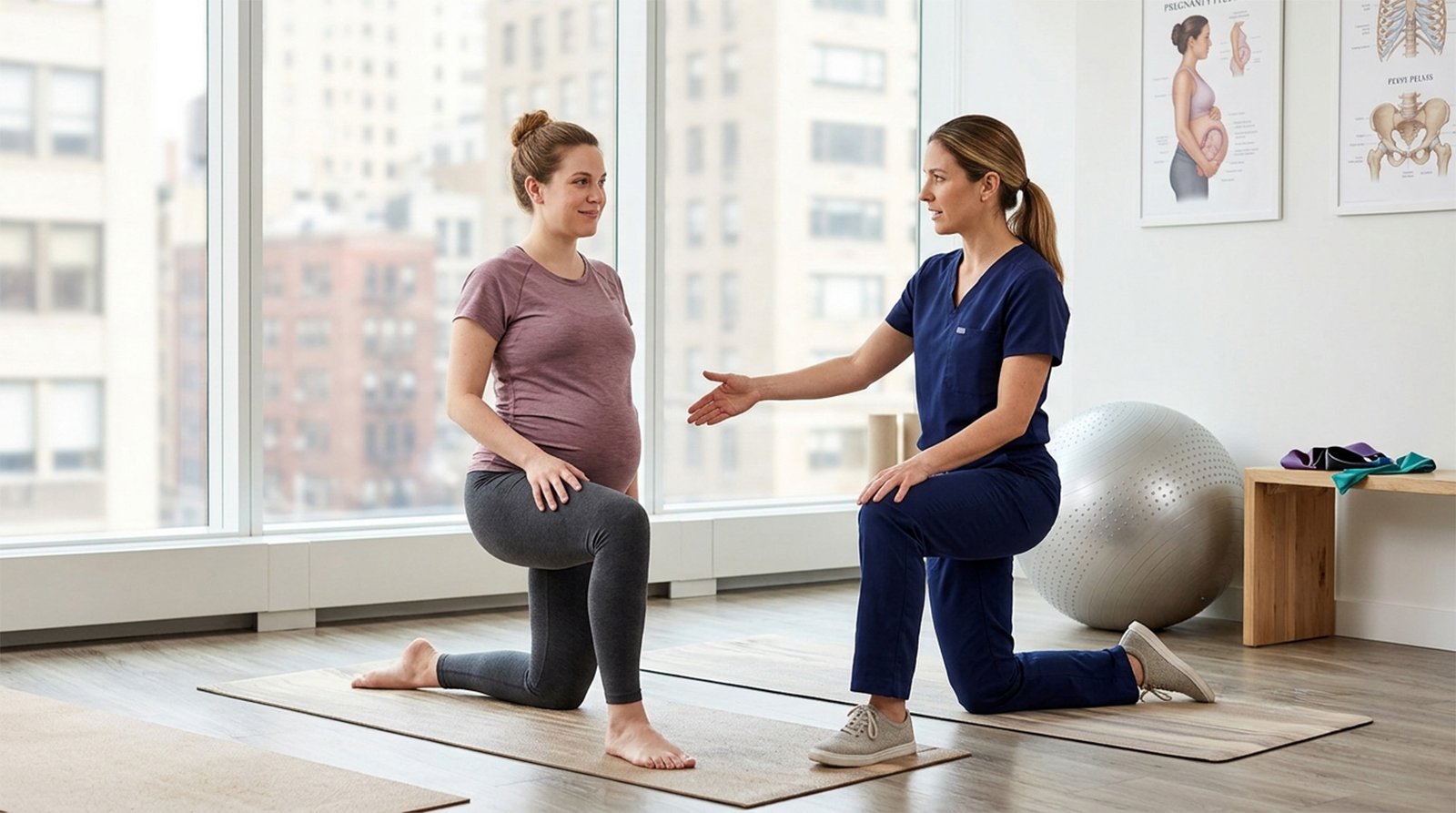
Preparing for labor and delivery involves more than packing a hospital bag. Understanding what to expect, learning how your body may respond during labor, and practicing positions and movement strategies can help you feel more informed and prepared for birth.
Labor and delivery preparation can also include working with a physical therapist who specializes in pelvic health. Prenatal physical therapy may help you understand your pelvic floor, practice exercises and movement strategies, learn different labor positions, and prepare for the physical demands of childbirth.Depending on your pregnancy, health history, and birth plan, preparation may include education about the stages of labor, prenatal exercises, prenatal massage, perineal massage, breathing and relaxation strategies, and positions that can be used during labor and delivery.Why Prepare for Labor and Delivery?
Every birth is different, and it is impossible to predict exactly how labor will unfold. However, learning about the process ahead of time can help you understand your options and communicate more confidently with your care team.Physical preparation may also help you become more familiar with movement, breathing, relaxation, and pelvic floor awareness before labor begins.During prenatal physical therapy, your therapist may discuss:- The stages of labor and what to expect during each stage
- Pelvic floor muscle awareness and relaxation
- Prenatal exercises for strength, mobility, and endurance
- Positions and movement strategies for labor
- Perineal massage and when it may be appropriate
- Strategies for changing positions during labor
- Preparing for different birth plans, including medicated and non-medicated birth
- Recovery considerations for after delivery
🡒 Learn more about pelvic floor physical therapy at NYPPT →
Understanding the Stages of Labor
One of the most useful parts of childbirth preparation is understanding how labor progresses. Labor is generally described in stages, although each person’s experience can be different.First stage: This is when the cervix begins to efface and dilate. It includes early labor, active labor, and the transition phase. Contractions typically become stronger, longer, and closer together as labor progresses.Second stage: This is the pushing and birth stage, when the baby moves through the birth canal and is delivered.Third stage: This occurs after the baby is born and involves delivery of the placenta.Understanding these stages can help you know what your body may be doing and what types of movement, breathing, and support strategies may be useful. Your obstetric or midwifery team should always guide medical decisions during labor.Prenatal Exercises for Labor Preparation
Exercise during pregnancy can be an important part of staying physically prepared, provided your healthcare provider has cleared you for activity.Prenatal physical therapy exercises are individualized based on your pregnancy, symptoms, fitness level, and goals. Depending on your needs, your program may include:- Pelvic floor awareness and relaxation exercises
- Hip mobility exercises
- Gentle strengthening exercises
- Core and trunk stability work
- Breathing and coordination exercises
- Postural and movement training
- Functional movements such as squatting or supported standing
Why Pelvic Floor Relaxation Matters During Labor
The pelvic floor plays an important role during pregnancy, labor, and postpartum recovery. Many people are familiar with strengthening the pelvic floor, but learning how to relax and lengthen the pelvic floor can also be important when preparing for vaginal delivery.Your pelvic floor physical therapist can help you understand the difference between contraction and relaxation and teach you how to coordinate your breathing and pelvic floor muscles.This awareness may help you feel more comfortable with the changes your body experiences during labor.Prenatal Massage During Pregnancy
Prenatal massage may be used as part of pregnancy comfort and body preparation when appropriate. Massage can help address areas of muscular tension and provide an opportunity for relaxation.A physical therapist may incorporate hands-on techniques based on your individual symptoms and stage of pregnancy. Treatment can be adapted around areas such as the hips, back, pelvis, and other regions affected by pregnancy-related changes.Because pregnancy involves important changes to the body, prenatal massage should be provided by a trained professional who understands pregnancy-related considerations. Your obstetric or healthcare provider should also be consulted when there are medical concerns or pregnancy complications.What Is Perineal Massage?
Perineal massage during pregnancy involves gentle massage and stretching of the tissues around the vaginal opening and perineum, usually during the later weeks of pregnancy.The purpose is to help the birthing person become familiar with the sensation of pressure and stretching in the perineal tissues and may help improve tissue flexibility.A pelvic floor physical therapist can provide education about technique, positioning, comfort, and timing so that perineal massage can be performed appropriately.Can Perineal Massage Reduce the Risk of Perineal Tears?
Perineal massage has been studied as one strategy that may reduce the likelihood of certain perineal trauma outcomes during vaginal birth, particularly for people who have not previously given birth vaginally. However, it does not guarantee that a tear or other perineal injury will not occur.Many factors influence perineal outcomes during delivery, including the baby’s position and size, the course of labor, delivery technique, tissue characteristics, and whether an assisted delivery or other intervention is required.For this reason, perineal massage should be viewed as one component of labor and delivery preparation, rather than a guarantee of preventing tears.A pelvic floor physical therapist can teach you how to approach perineal massage safely and comfortably and help determine whether it is appropriate for your individual circumstances.Labor Positions: Why Movement Can Matter
There is no single “best” position for every person during labor. Changing positions can provide different ways to manage discomfort, use gravity, and accommodate your birth plan.Your available positions may also change depending on whether you have pain medication, an epidural, monitoring equipment, or other medical considerations.Positions for Non-Medicated Labor
People planning an unmedicated or non-medicated birth may have greater freedom to move throughout labor, depending on their medical situation and care setting.Practicing several positions before labor can make it easier to move between them when you need comfort or a change in strategy.Positions for Medicated Labor
An epidural or other pain medication does not necessarily mean that you cannot change positions. However, your ability to stand or walk may be limited, and your care team may recommend positions based on your level of sensation, monitoring, and safety.Your specific options will depend on your medical circumstances and the policies and equipment available at your delivery location.Preparing for Different Birth Plans
Your birth plan can help communicate your preferences, but flexibility is important because labor can change quickly.Rather than preparing for only one exact scenario, consider learning skills that can be adapted to different situations.For example, you can practice:- Breathing and relaxation techniques
- Several labor positions
- Pelvic floor relaxation
- Hip and pelvic mobility exercises
- Supported movement strategies
- Ways to communicate your comfort and positioning preferences
How a Pelvic Floor Physical Therapist Can Help You Prepare
A pelvic floor physical therapist can help translate general childbirth information into practical movement and body-awareness strategies that are specific to you.Depending on your needs, an evaluation may include discussion of your pregnancy history, symptoms, activity level, pelvic floor function, mobility, strength, and birth goals.Your therapist may then create an individualized program that includes exercises, education, manual techniques, breathing strategies, pelvic floor coordination, and labor-position practice.The purpose is not to predict your delivery or replace your obstetric care. Instead, physical therapy can complement your prenatal care by helping you better understand your body and prepare for the physical demands of pregnancy, labor, and postpartum recovery.🡒 Explore physical therapy treatments at NYPPT →