
Proven Relief: How Shockwave Therapy Heals Fibrosis and Post-Radiation Stiffness
nyppt
January 15, 2026
Blogs
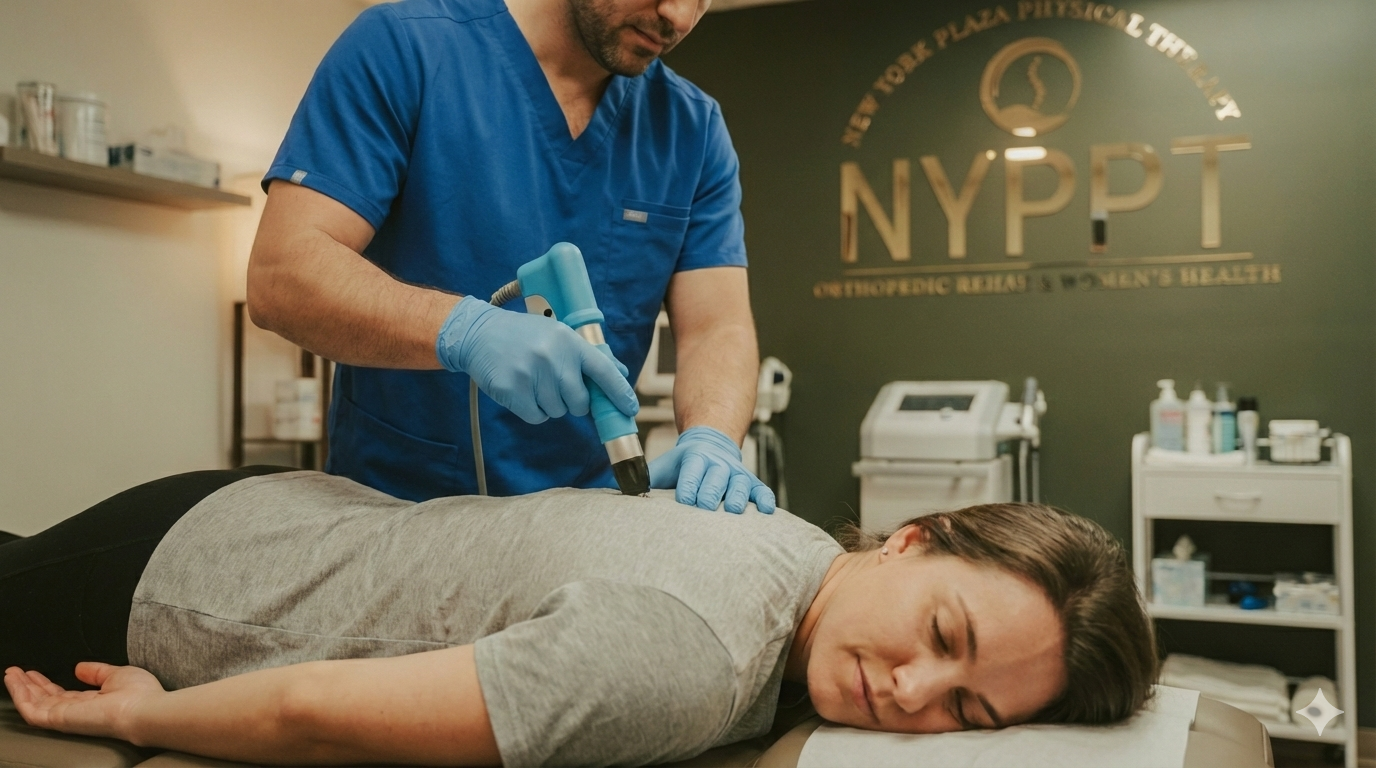
Fibrosis. Lymphedema. Radiation-induced tightness.
If you’ve dealt with any of these, you know how frustrating chronic stiffness, swelling, and restricted movement can feel. The affected areas often seem “stuck,” no matter how much you stretch, massage, or move.
But at NYPPT, we’re using a research-backed solution that’s changing how these conditions are treated: extracorporeal shockwave therapy (ESWT).
Here’s what it is, how it works, and why it may be the key to unlocking deeper recovery.
What Is Shockwave Therapy and How Does It Help Fibrosis?
Extracorporeal shockwave therapy (ESWT) uses focused acoustic waves to stimulate deep tissue healing. Originally used to break up kidney stones, it’s now a leading non-surgical option for chronic pain, tendinopathies, and fibrotic tissue.
When applied to fibrosis, these pressure waves:
Break down collagen scarring
Improve microcirculation
Trigger tissue regeneration
Restore elasticity and pliability
According to recent studies published in PubMed, shockwave therapy for fibrosis promotes cellular-level repair that manual techniques can’t always reach.
🡒 Explore how we deliver precision therapy at NYPPT →
Shockwave Therapy for Fibrosis After Radiation Treatment
After cancer treatment or radiation therapy, many patients develop post-radiation fibrosis — thickened, scarred connective tissue that restricts movement and causes pain.
Manual therapy can help soften these areas, but shockwave therapy provides a non-invasive, deeper-acting solution. It targets:
Dense scar tissue
Radiation-induced soft tissue damage
Adhesions that limit shoulder, chest, or trunk movement
By improving circulation and tissue metabolism, shockwave therapy supports a more complete return to function, especially when paired with physical therapy.
Read more about radiation fibrosis from the National Cancer Institute
How Shockwave Therapy Supports Lymphedema and Soft Tissue Health
People with lymphedema often develop stiffness and skin changes due to fluid buildup and chronic inflammation. Over time, this leads to fibrosis and restricted mobility.
When used by a trained PT, shockwave therapy for lymphedema can:
Loosen fibrotic tissue
Reduce hardening
Support lymph flow and soft tissue remodeling
Enhance the effectiveness of manual lymphatic drainage
We combine this therapy with stretching, cupping, and movement re-education to help restore function without overwhelming the system.
Learn more at the Lymphatic Education & Research Network
What to Expect During Shockwave Therapy for Fibrosis
Shockwave therapy sessions are quick (10 – 15 minutes), non-invasive, and require no downtime.
You may feel:
- A tapping or pulsing sensation
- Mild sensitivity over tight areas
- Gentle post-treatment soreness (like after a deep massage)
Most patients notice improved softness and movement after just 2 – 3 sessions, especially when combined with physical therapy and manual techniques.
🡒 Want to know if you’re a candidate? Let’s talk →
Who Can Benefit from Shockwave Therapy for Fibrosis and Lymphedema?
We often recommend ESWT for patients who:
- Have fibrotic tissue after surgery, radiation, or trauma
- Are managing lymphedema and feel stuck in progress
- Experience skin tightness, pulling, or “cord-like” sensations
- Have plateaued with massage, exercise, or traditional therapy
- Want to improve tissue response before returning to activity
Every session at NYPPT is one-on-one, personalized, and designed with your long-term recovery in mind.
Frequently Asked Questions (FAQ)
1. Can shockwave therapy really help with fibrosis?
Yes. Research shows that focused ESWT can help soften and break down fibrotic adhesions, restoring tissue mobility.
2. Is it safe for cancer survivors or post-radiation treatment?
Yes, when guided by a trained physical therapist. We tailor treatment based on medical history and healing stage.
3. How many sessions do I need?
Most patients benefit from 3–6 weekly sessions, often paired with mobility and manual therapy.
4. Will it hurt or cause swelling?
You may feel mild discomfort during treatment, but it’s well-tolerated. Post-session soreness is normal and temporary.
5. Is this covered by insurance?
Shockwave therapy may not be fully covered. We offer transparent pricing and can verify your benefits in advance.